Website Design Cost: What Changes the Budget
A website budget becomes unreliable when design, development, content, and ongoing updates are treated as one line item.
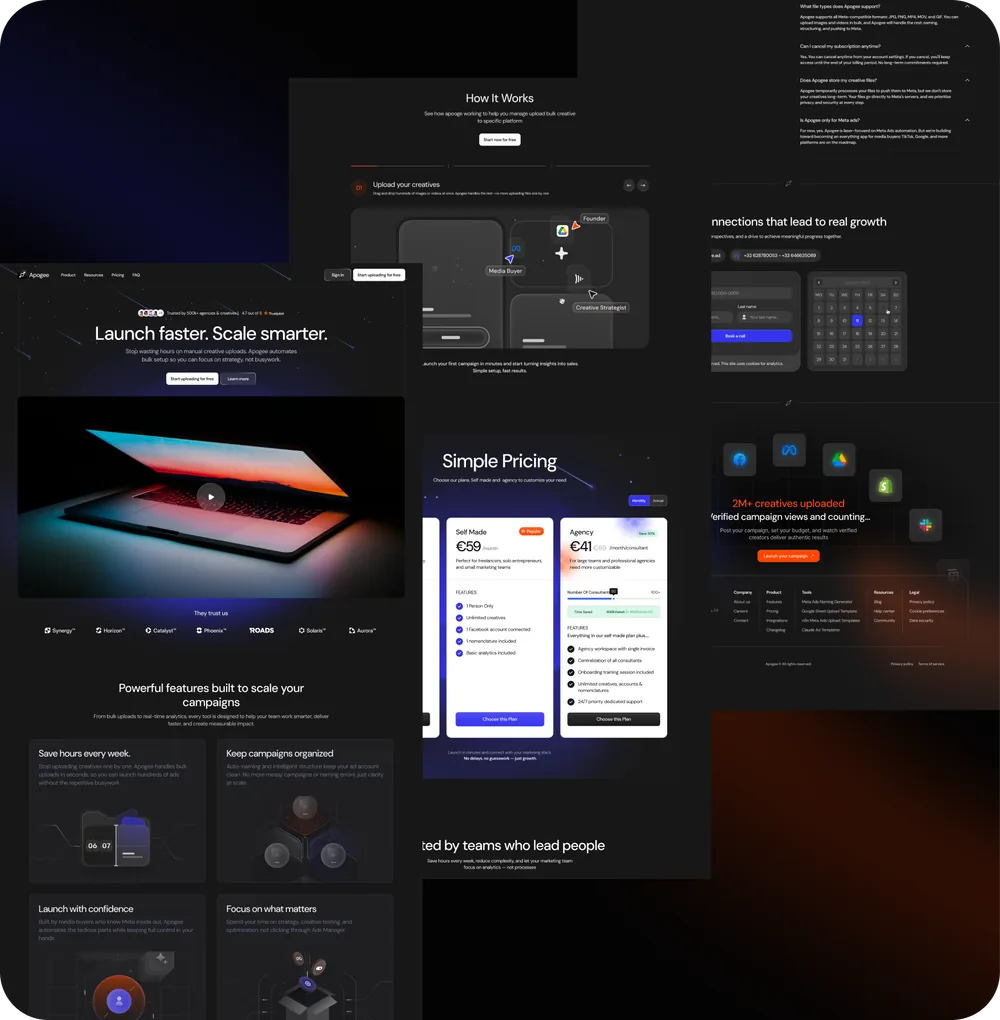
Website design cost is primarily a scope-mapping problem. Two sites with the same number of published pages can require very different effort: one may reuse a small set of templates, while the other needs unique layouts, complex responsive behavior, product states, and an implementation handoff. Separate those variables before comparing proposals.
Build a page and template inventory first
| Inventory item | What to define | Why it affects scope |
|---|---|---|
| Page types | Home, service, pricing, article, contact, legal | Each type may require a distinct layout system |
| Unique pages | Campaign or flagship pages that cannot reuse a template | Unique composition adds design and review work |
| Responsive states | Desktop, tablet, mobile, navigation behavior | Components must adapt, not merely shrink |
| Content status | Final copy, draft copy, or placeholders | Unstable content causes layout rework |
| UI states | Empty, error, success, loading, hover, validation | Interfaces need more than ideal-state screens |
| Integrations | Forms, booking, checkout, search, account areas | External behavior creates constraints and edge cases |
| Handoff | Design only, design system, or implemented site | The finish line changes the supplier profile |
Counting URLs alone overstates repeated pages and understates unique templates. A resource library may contain many entries but use one article template; a short SaaS site may contain fewer URLs yet require several product flows and states. List templates separately from instances so providers price the same architecture.
Content readiness prevents expensive reflow
Designing around placeholder copy works only when final text has similar length and hierarchy. A new headline, proof block, pricing explanation, or disclosure can change the composition. Mark every section as approved, provisional, or missing. If copy is unresolved, include content collaboration in the scope instead of treating later reflow as a revision.
Design and development are different deliverables
A high-fidelity Figma file does not create a working site. Clarify whether the engagement includes information architecture, wireframes, visual design, component documentation, front-end implementation, CMS configuration, analytics, accessibility checks, and launch support. A lower design quote may simply stop earlier in that chain.
If your team needs recurring campaign pages after launch, the buying decision differs from a one-off redesign. A web design subscription can support ongoing page production, while a full rebuild may still need a defined project. Our website and UI services show the production side; implementation responsibilities should still be stated in the brief.
Evaluate the handoff, not just the homepage
A website system is credible when another designer or developer can extend it without reverse-engineering decisions. Ask to see component names, spacing rules, type styles, grid behavior, responsive annotations, and treatment of repeated elements. Review a dense internal page and a mobile state, not only the polished homepage.
Confirm who signs off on architecture, copy, visual direction, and implementation. Mixing those approvals into one late review creates avoidable loops: a stakeholder may reject a layout when the underlying objection is messaging or page priority. The design workflow works best when each request enters with one objective and one approval owner.
Start with the real scope
Add a sitemap, template inventory, content-status sheet, required integrations, current analytics or user evidence supplied by the product owner, and the party responsible for development. Define browser and device expectations, accessibility responsibilities, CMS constraints, migration needs, and who may approve changes after handoff. Acceptance should cover representative desktop and mobile layouts, core component states, editable sources, implementation notes, and a review of the built page if development is included. Without that finish line, “website design” can end at wireframes, polished files, or a live site depending on the supplier.
A useful comparison accounts for page templates, unique layouts, responsive states, integrations, copy readiness, and implementation requirements. If these inputs are missing, a low headline price or broad promise does not describe the same work.
Write down the deliverable, intended use, approval owner, required file formats, and what a successful handoff contains. This turns an uncertain purchase into a brief that different providers can answer consistently.
Compare the operating models
| Model | Best fit | Main constraint |
|---|---|---|
| Self-serve tool | Controlled, repeatable internal work | Your team supplies time and judgment |
| Freelancer | Defined specialist project | Availability and range depend on one person |
| Agency | Strategy-led engagement | Project cycles and scope changes |
| In-house | Stable full-time workload | Fixed capacity and one hiring profile |
| Our subscription | Recurring, varied design demand | Work moves through active request capacity |
A project model can be the right answer for isolated work. Our subscription is the fourth route for recurring demand: one request queue, a dedicated project manager, unlimited revisions, and source file ownership.
How our offer addresses the pain point
Requests are prioritized in one queue instead of being quoted separately. Prestige and Elite process one active request at a time; Commando supports up to two in parallel. Plans can change as volume changes, and standard plans can be paused or canceled at any time.
Our team includes more than 30 designers and average delivery is 48 hours. Published deliverable ranges vary by work type, so the pricing page is the right place to check scope and capacity. See our work for real delivery examples.
Frequently asked questions
Who is this model best for?
It fits teams with recurring design demand, clear approval ownership, and enough requests to use a continuing production queue.
What should I confirm before buying?
Confirm supported deliverables, active capacity, turnaround language, revision rules, communication, cancellation, and source file ownership in writing.
What proof does Design Scaling publish?
Client retention is 93 percent and satisfaction is 4.8. Every plan includes unlimited revisions, a dedicated project manager, and ownership of source files.
When should I choose another model?
Choose a freelancer for isolated specialist work, an agency for strategic transformation, or an in-house designer when stable full-time demand requires daily internal context.
The next step
Compare your recent request volume with our plans and review how the queue works. If the fit is close, book a call to scope the queue without inventing a delivery promise.
Continue with the next related guide or another connected topic.
Let's cost your design volume.
Two numbers decide whether this beats what you already do: how much design you need per month, and what it costs you today. Send both and we will run the comparison with you.
Get my volume costed